

Can I Cancel a Timeshare After My Spouse Dies?
Quick answer: You may have options if your spouse passed away and you no longer want the timeshare. Do not assume you are automatically stuck with it. The next step depends on whose name is on the account, who signed the contract, whether money is still owed, and whether the timeshare is tied to an estate. Before you pay fees, sign resort forms, or agree to take over the account, make sure you understand what the paperwork actually says.
You Should Not Have to Figure This Out Alone
Losing a spouse is already hard. A timeshare can make it feel even harder.
You may be dealing with grief, bills, estate paperwork, and family decisions when a resort sends a maintenance fee bill, transfer form, or account letter. You may not know if you are responsible, if you should keep paying, or if you can walk away from the timeshare.
Start by slowing down. Do not panic. Do not sign right away. Find out whose name is on the timeshare and what the resort is asking you to do.
Check Who Is Listed on the Timeshare
The timeshare may be in your name, your spouse’s name, both names, a trust, or another ownership setup. This detail matters because each situation can lead to a different next step.
If both spouses signed the contract, the situation may be different than if only one spouse signed. If there is still a loan, unpaid maintenance fees, or special assessments, those balances also need attention before anyone makes another payment decision.
Do not assume the resort’s first answer is the full answer. Resort letters may be meant to keep the account paid or transferred, but you should understand the obligation before you respond.
Do Not Sign or Pay Too Quickly
After your spouse dies, the resort may ask you to sign transfer forms, make payments, accept a payment plan, or agree to new terms.
Slow down before you do that.
Paying fees may feel like the safe choice, but it can create confusion if you are not sure whether you are personally responsible. Signing paperwork can also make the situation harder if you do not understand what you are accepting.
Be careful with any upgrade, refinance, deed-back, surrender option, or new points package. Before you agree, ask what happens to the current timeshare, loan balance, unpaid fees, and future costs. Get the answer in writing.
What to Gather Before Asking for Help
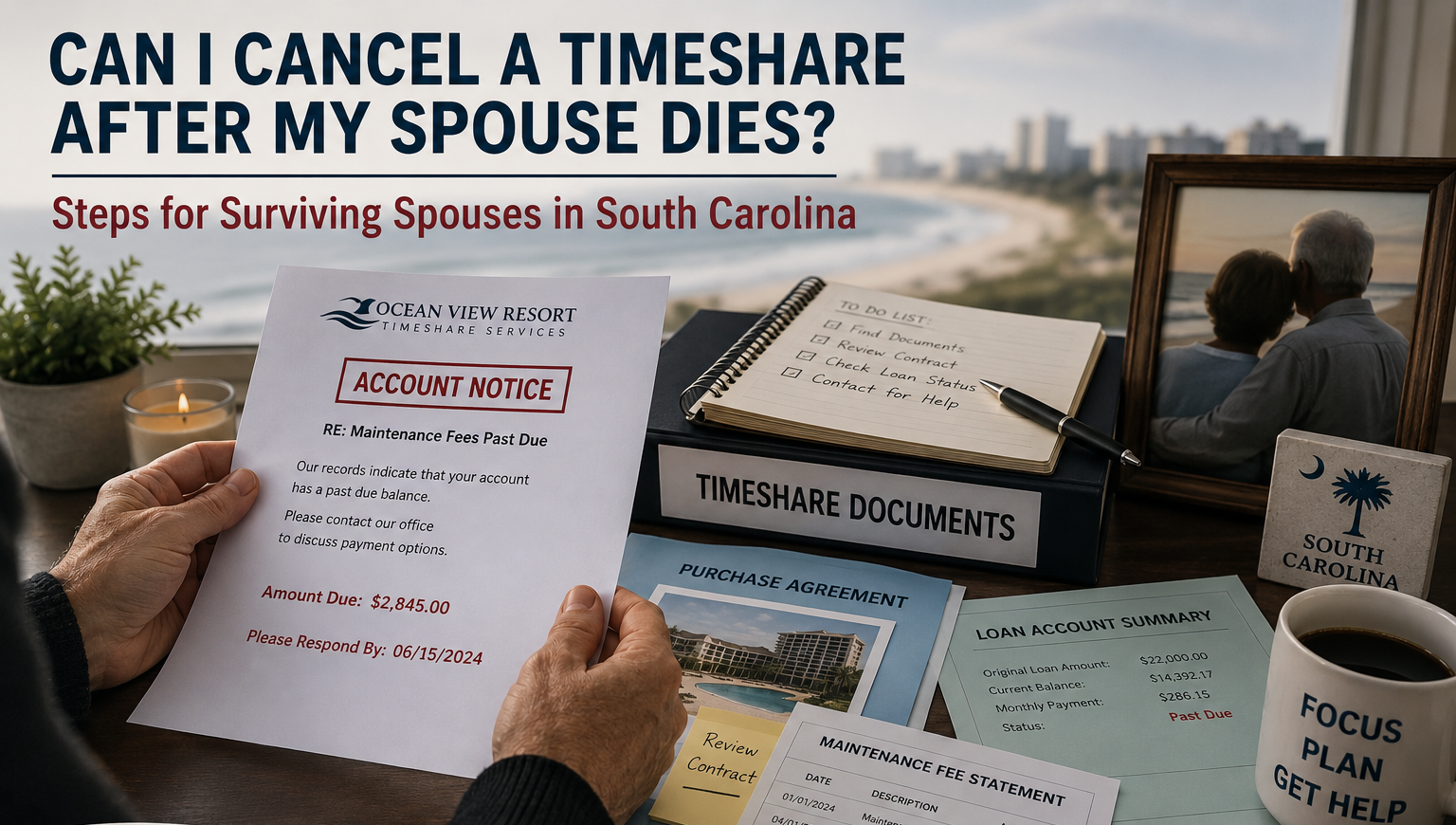
Start with whatever paperwork you can find. Helpful documents include the timeshare contract, deed or ownership record, loan papers, maintenance fee bills, payment history, resort letters, estate documents, transfer forms, and collection notices.
You do not need everything to ask for help. Start with what you have.
The main questions are simple: Was your name on the contract? Was your spouse the only owner? Is there still a loan? Are fees current or past due? Is the resort asking you to sign anything new? Has the timeshare already been transferred through an estate?
Those answers can change what steps make sense next.
Why This Comes Up for South Carolina Families
For South Carolina families, the issue may involve where the surviving spouse lives, where the estate is being handled, and where the timeshare property is located.
Some timeshares are connected to Myrtle Beach, Murrells Inlet, Hilton Head, or other resort areas. Others are located in Florida, Tennessee, Nevada, Mexico, or another vacation destination, even though the surviving spouse lives in South Carolina.
No matter where the resort is, the same concern often comes up: the surviving spouse does not want the timeshare, but the bills and letters keep coming. The contract, ownership records, loan status, estate documents, and resort letters should guide the next step, not pressure from the resort.
How TimeShareBeGone Can Help
TimeShareBeGone helps timeshare owners and families understand possible cancellation options after major life changes, including the death of a spouse.
For surviving spouses, TimeShareBeGone can look at the ownership records alongside the contract, loan papers, fee history, resort letters, and estate or transfer documents. The goal is to understand whether the account is tied to the deceased spouse, whether the surviving spouse is listed, whether balances remain, and what options may be available.
TimeShareBeGone provides contract review and attorney-backed support for South Carolina families who want clarity before they pay fees, sign resort paperwork, or accept an offer they do not understand.
Frequently Asked Questions
Talk to TimeShareBeGone Before You Sign or Pay More
If your spouse passed away and you no longer want the timeshare, do not guess your way through it.
Before you pay fees, sign transfer papers, accept a resort offer, or agree to take over the account, let TimeShareBeGone review the situation and explain your options.
Contact TimeShareBeGone today to request a consultation before you pay fees, sign transfer forms, or accept responsibility for a timeshare you may not want.