


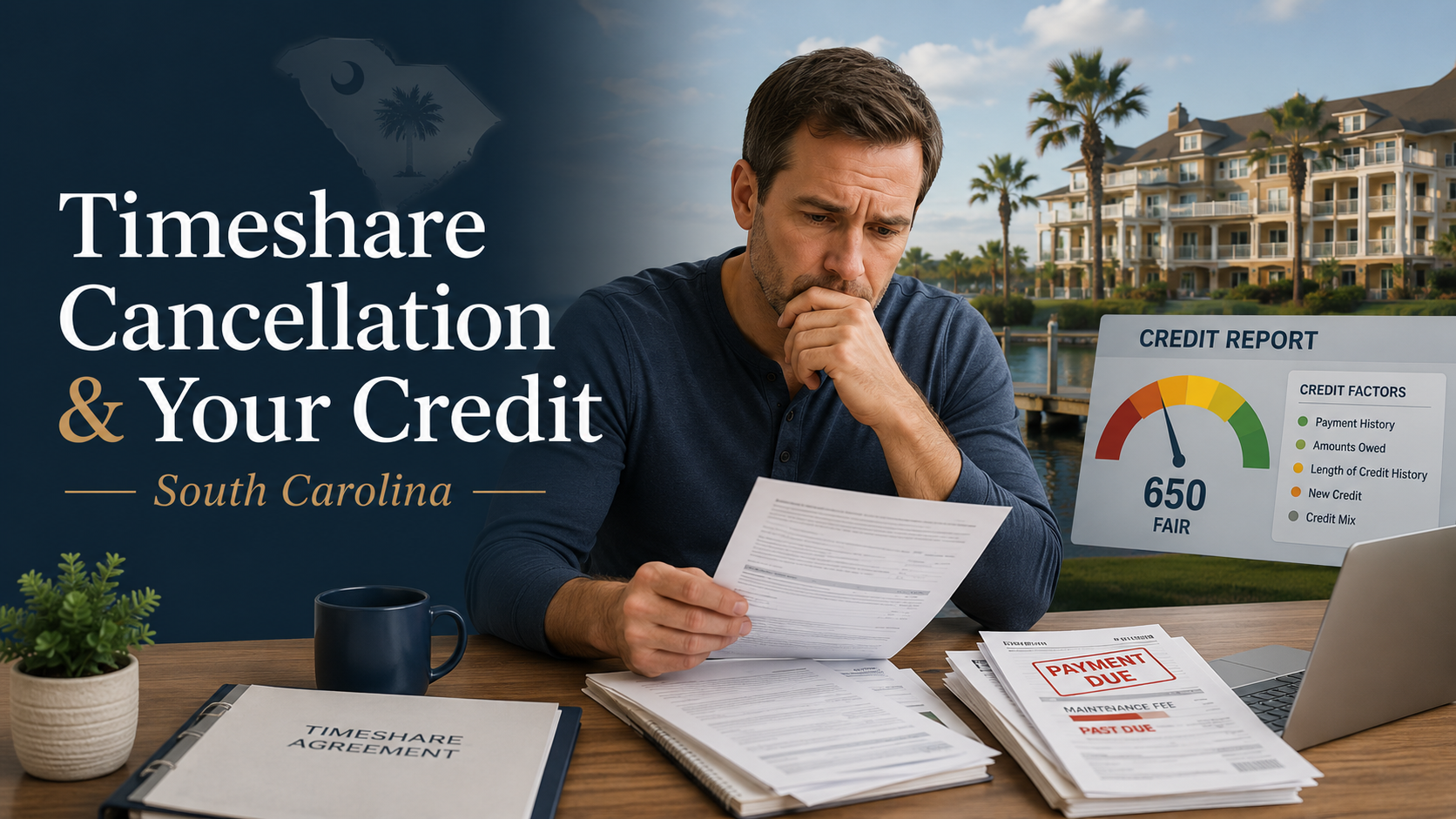
Does Timeshare Cancellation Hurt Your Credit in South Carolina?
Quick answer: Timeshare cancellation does not automatically hurt your credit. Credit problems usually happen when a timeshare loan, maintenance fee balance, or resort account becomes past due, goes to collections, or leads to foreclosure-related action. If you still owe money or you are already behind, do not stop paying or ignore resort notices without first understanding the risks.
Cancellation Is Not Usually the Credit Problem
Many timeshare owners are afraid that simply trying to cancel will damage their credit. In most cases, the cancellation request itself is not the issue. The real concern is the account status.
If your payments are current, your situation may look very different from someone who is behind on a loan, unpaid maintenance fees, or collection notices. If the timeshare is financed, the loan may also need to be reviewed separately from the resort account because the lender and resort may not be the same company.
That is why the question is not only, “Will cancellation hurt my credit?” The better question is, “What do I owe, who do I owe, and what could happen if I stop paying before this is resolved?”
What Can Actually Hurt Your Credit?
Credit risk usually comes from unpaid obligations, not from asking for help. Missed loan payments, unpaid maintenance fees, late fees, collection activity, and foreclosure-related action may all create problems depending on your contract, lender, resort, and payment history.
This is where many owners make a costly mistake. They stop paying because they are frustrated, because they no longer use the timeshare, or because they believe nonpayment will force the resort to cancel the account. That can backfire. The resort or lender may continue billing, add late fees, report missed payments, send the account to collections, or take other action allowed under the contract.
You may still have options, but those options should be reviewed before you make a payment decision that could affect your credit.
Do Not Stop Paying Without a Plan
If you are thinking about stopping payments, slow down first. A timeshare cancellation process should not be handled by guessing, especially when credit is involved.
Before you stop paying, accept a resort settlement, sign new paperwork, or agree to an upgrade, your full account should be reviewed. That includes the purchase agreement, loan paperwork, maintenance fee bills, payment history, resort letters, and any collection notices.
The goal is simple: understand the risk before you act. A clean, informed approach is always better than reacting out of stress or frustration.
Why South Carolina Owners Ask This Question
Many South Carolina owners bought timeshares during vacation presentations in Myrtle Beach, Murrells Inlet, Hilton Head, or another resort market. Others live in South Carolina but own a timeshare in Florida, Tennessee, Nevada, Mexico, or another vacation destination.
The concern is usually the same. The fees keep coming, the payments feel too high, the timeshare is not being used, and the owner wants out without creating a credit problem. That is a reasonable concern, but the answer depends on the paperwork and account status, not just the location.
South Carolina owners should be careful with generic advice. A paid-off timeshare, a financed timeshare, a past-due account, and a collection account may all need different review.
How TimeShareBeGone Can Help
TimeShareBeGone helps timeshare owners review their documents, account status, and possible cancellation options before they make a decision that could affect their finances.
When credit is a concern, the review should look at the full picture: the contract, loan balance, maintenance fees, payment history, resort communication, and any collection activity. This helps identify what issues may need attention before the owner stops paying, signs new paperwork, or accepts a resort offer.
TimeShareBeGone provides contract review and attorney-backed support for timeshare owners in South Carolina who want a clearer path forward.
Frequently Asked Questions
Talk to TimeShareBeGone Before You Risk Your Credit
If you are worried about your credit, do not guess and do not rely on pressure from the resort.
Before you stop paying, ignore notices, accept a settlement, or sign new paperwork, let TimeShareBeGone review your situation and explain your options.
Contact TimeShareBeGone today to request a consultation before one payment decision turns into a bigger credit problem.