

What Should I Do if My Resort Refuses a Deed-Back in South Carolina?
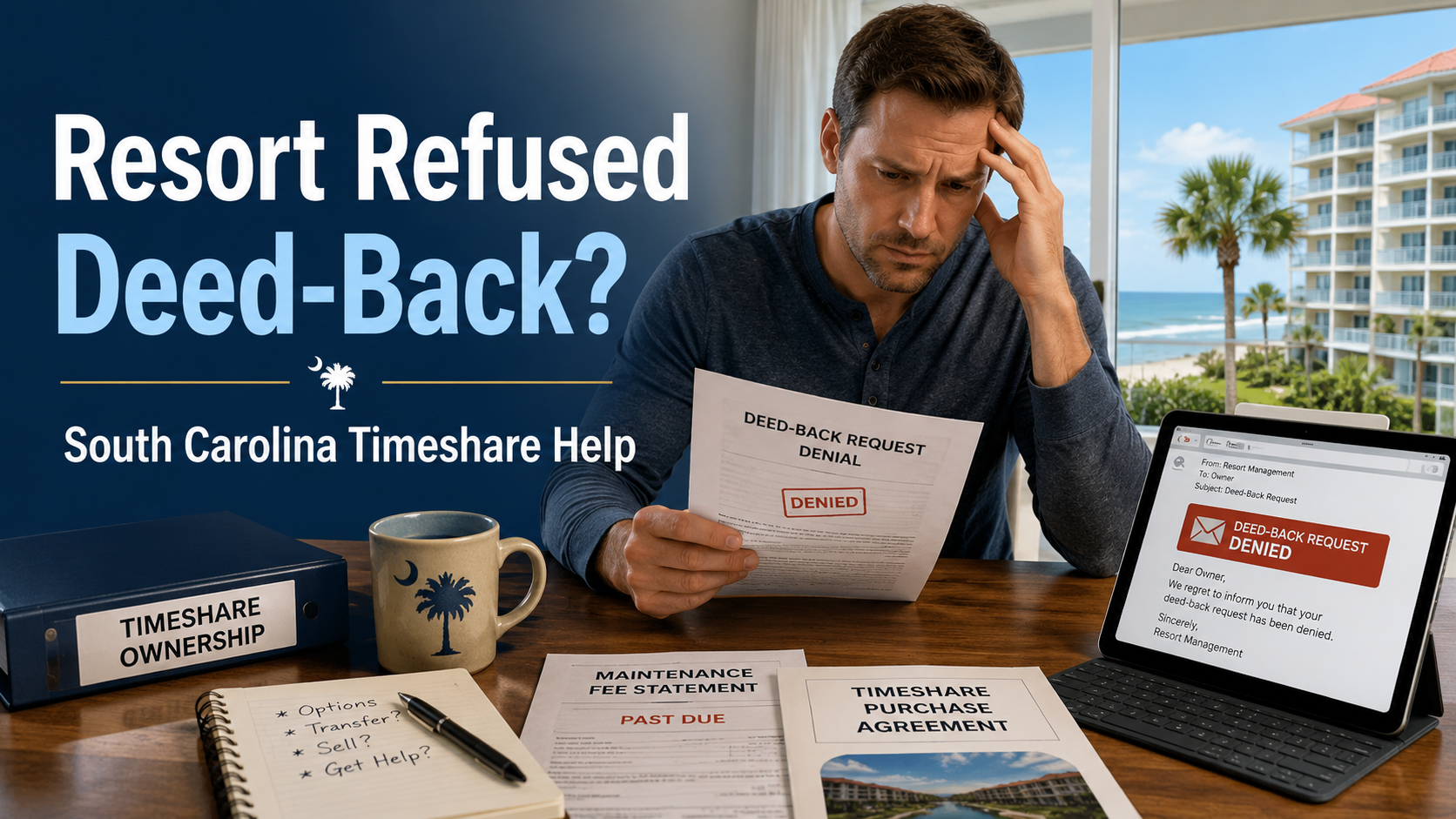
Quick answer: If your resort refuses a deed-back, save the denial letter or email, ask why the request was refused, gather your ownership documents, and avoid signing or paying for another resort option until you understand the full obligation. A refused deed-back does not always mean you are stuck, but it does mean your contract, fees, loan status, and resort communication should be checked before you act.
A Refused Deed-Back Is Not the End of the Road
A deed-back is when an owner asks the resort or developer to take the timeshare back. Some resorts call this a surrender, voluntary return, or exit program.
The important thing to know is this: a deed-back is usually controlled by the resort. The resort may set conditions, limit who qualifies, or refuse the request. Cancellation is broader because it looks at the contract, sales history, loan balance, fees, account status, and resort communication to see what other options may be available.
So if the resort says no, do not assume the answer is final. It may only mean that the resort will not take the timeshare back through its own deed-back program.
Why Resorts Refuse Deed-Back Requests
Resorts may refuse deed-back requests for several reasons. The account may have a loan balance, unpaid maintenance fees, special assessments, missing paperwork, ownership issues, or transfer restrictions. Some resorts also have limited surrender programs or may not want more inventory returned to them.
In other cases, the resort may offer a different path, such as paying past-due fees, upgrading, listing the timeshare for resale, or signing new terms.
Slow down before agreeing to any of that. A resort offer may not fully release you from the timeshare. It may also add cost, extend the obligation, or create a new contract you do not want.
What to Do Next
If your deed-back request was denied, take a few careful steps before making another decision.
- Save the resort’s denial letter or email.
- Ask why the deed-back was refused.
- Gather your contract, loan papers, fee bills, and payment history.
- Do not sign an upgrade, resale listing, or new agreement without understanding it.
- Get the account checked before deciding whether to pay, stop paying, or accept another option.
You do not need perfect records before asking for help. Start with what you have. The goal is to understand what the resort refused, what conditions they gave, and whether the denial matches your contract and account history.
Do Not Stop Paying Out of Frustration
It is understandable to feel stuck or angry after a resort refuses to take the timeshare back. But stopping payments without a plan can create more problems.
Missed payments may lead to late fees, collection calls, credit concerns, or foreclosure-related action depending on your contract and account status. That does not mean you have no options. It means you should understand the risks before you act.
Be especially careful if the resort offers an upgrade, settlement, resale listing, or payment plan after denying your deed-back request. Do not assume the new offer solves the full problem unless it clearly explains what happens to your current obligation.
Why This Matters for South Carolina Owners
Many South Carolina owners bought timeshares during vacation presentations in Myrtle Beach, Murrells Inlet, Hilton Head, or other resort areas. Others live in South Carolina but own a timeshare in another state.
Either way, a denied deed-back creates the same core problem: the owner wants out, but the resort will not simply take the timeshare back.
A paid-off timeshare, a financed timeshare, a past-due account, and a resort account with special assessments may all need different attention. That is why generic advice is risky. The next step should be based on your documents, not pressure from the resort.
How TimeShareBeGone Can Help
TimeShareBeGone helps timeshare owners understand possible cancellation options after a resort refuses a deed-back.
The first step is to look at the full account picture. That may include the deed-back denial, purchase agreement, deed or ownership record, loan balance, maintenance fee history, payment status, resort letters, and any sales promises made when you bought or upgraded.
TimeShareBeGone provides contract review and attorney-backed support for South Carolina owners who want to understand what may be possible before they pay more fees, sign new resort paperwork, or assume the resort’s denial is the only answer.
Frequently Asked Questions
Talk to TimeShareBeGone Before You Accept the Resort’s Next Offer
If your resort refused a deed-back, do not assume the resort’s answer is your only option.
Before you pay more fees, accept an upgrade, list the timeshare for resale, or sign another agreement, let TimeShareBeGone look at the denial, the contract, and the account history.
Contact TimeShareBeGone today to request a consultation before a denied deed-back leads to more fees, more paperwork, or another decision you may regret.